Experiential Learning
What is Experiential Learning?
Experiential learning is an educational approach in which students learn through purposeful experience, followed by structured reflection, conceptualization, and application.
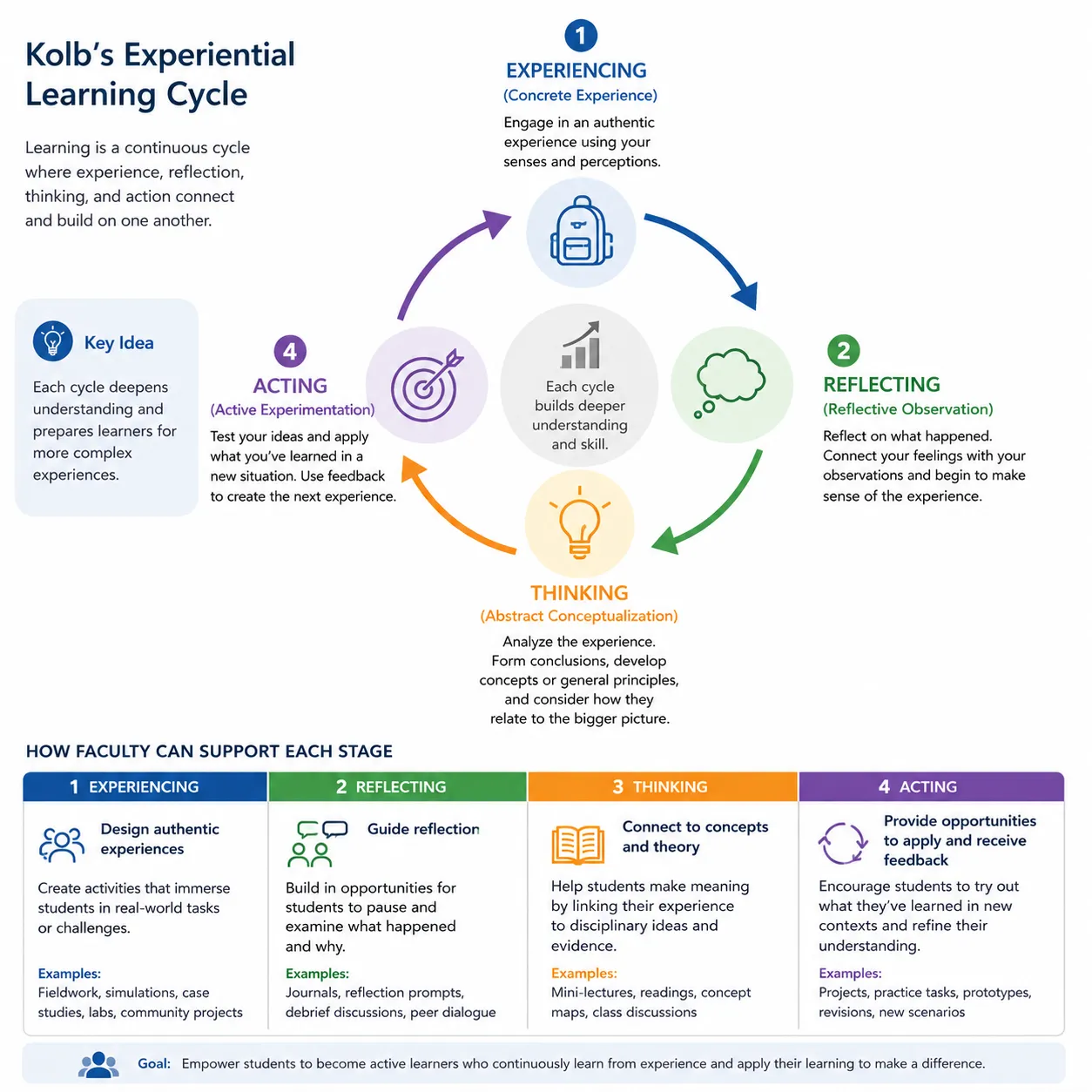
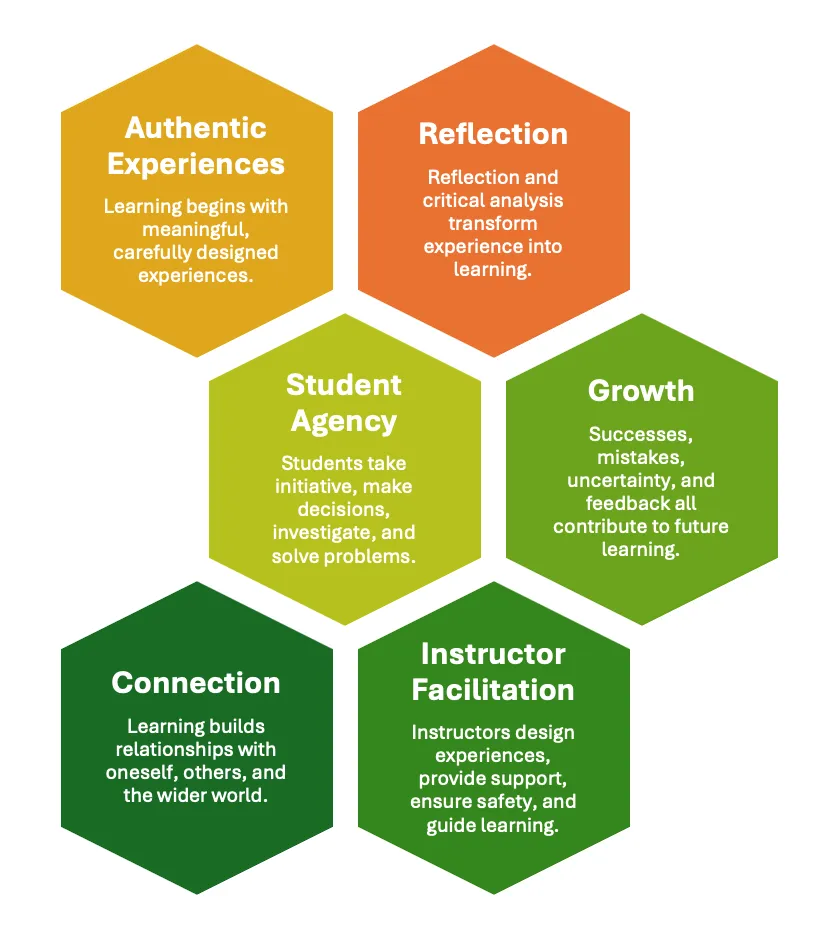
Experiential learning is not simply “add a real-world activity.” The better-supported design is authentic work plus deliberate reflection, appropriate task detail, and active facilitation.
When is Experiential Learning Appropriate?
Experiential learning is most appropriate when the course learning outcome requires students to use knowledge in context, not merely recall or recognize it.
Use it when students need to:
- Practice professional judgment or a complex skill.
- Learn from authentic ambiguity or consequences.
- Develop civic, intercultural, or community-facing capabilities.
- Integrate theory and practice through reflection.
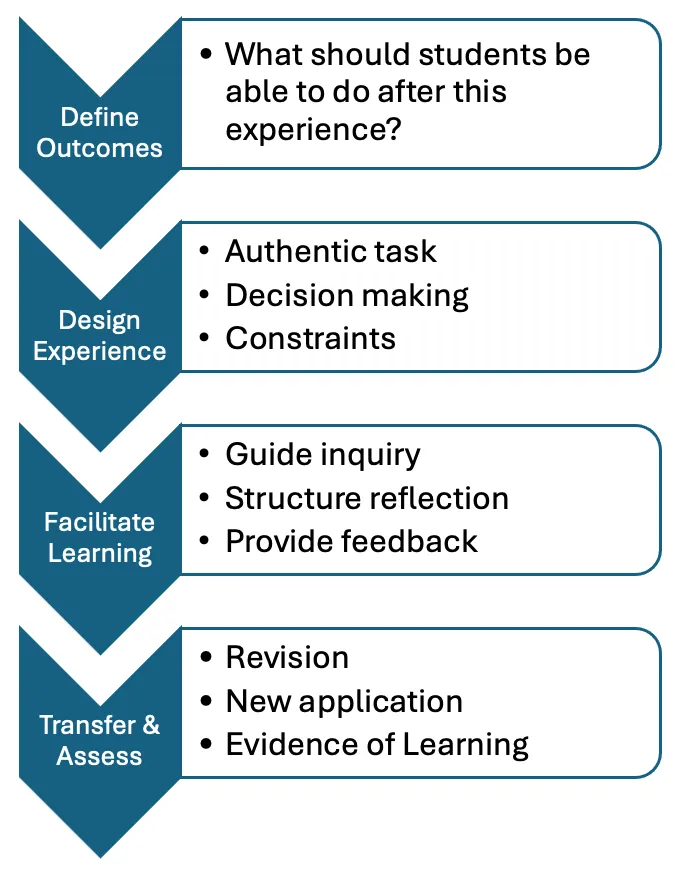
Designing Effective Experiential Learning
Challenges and Practical Tips
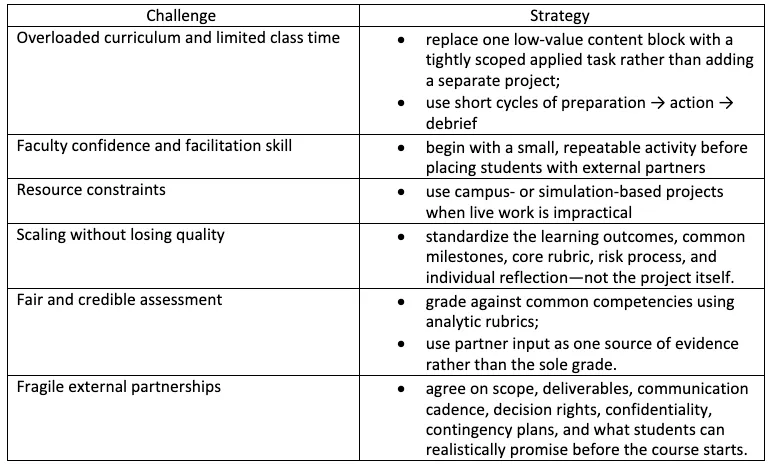
The common challenges—and workable responses—are: