
Model Classroom Pilot Project
Background
In Spring 2025, CTL, in collaboration with DKU IT, the Registrar, and Operations, collected feedback on classroom use in the Academic Building (AB) and Innovation Building (IB) to understand faculty and student needs for the upcoming Phase I classroom refresh project. A follow-up Model Classroom Pilot Project was then conducted during the 2025–26 academic year to test how selected classrooms support flexible, interactive, collaborative, inclusive, and student-centered teaching in real instructional contexts.
The studies aim to provide evidence-based guidance for future classroom planning by testing which spatial, technological, and operational arrangements best support DKU’s liberal arts teaching model and diverse disciplinary needs. They also support cross-unit collaboration and inform practical improvements in classroom design, scheduling, faculty support, classroom-use guidelines, and long-term maintenance.
Learning Space Design Framework
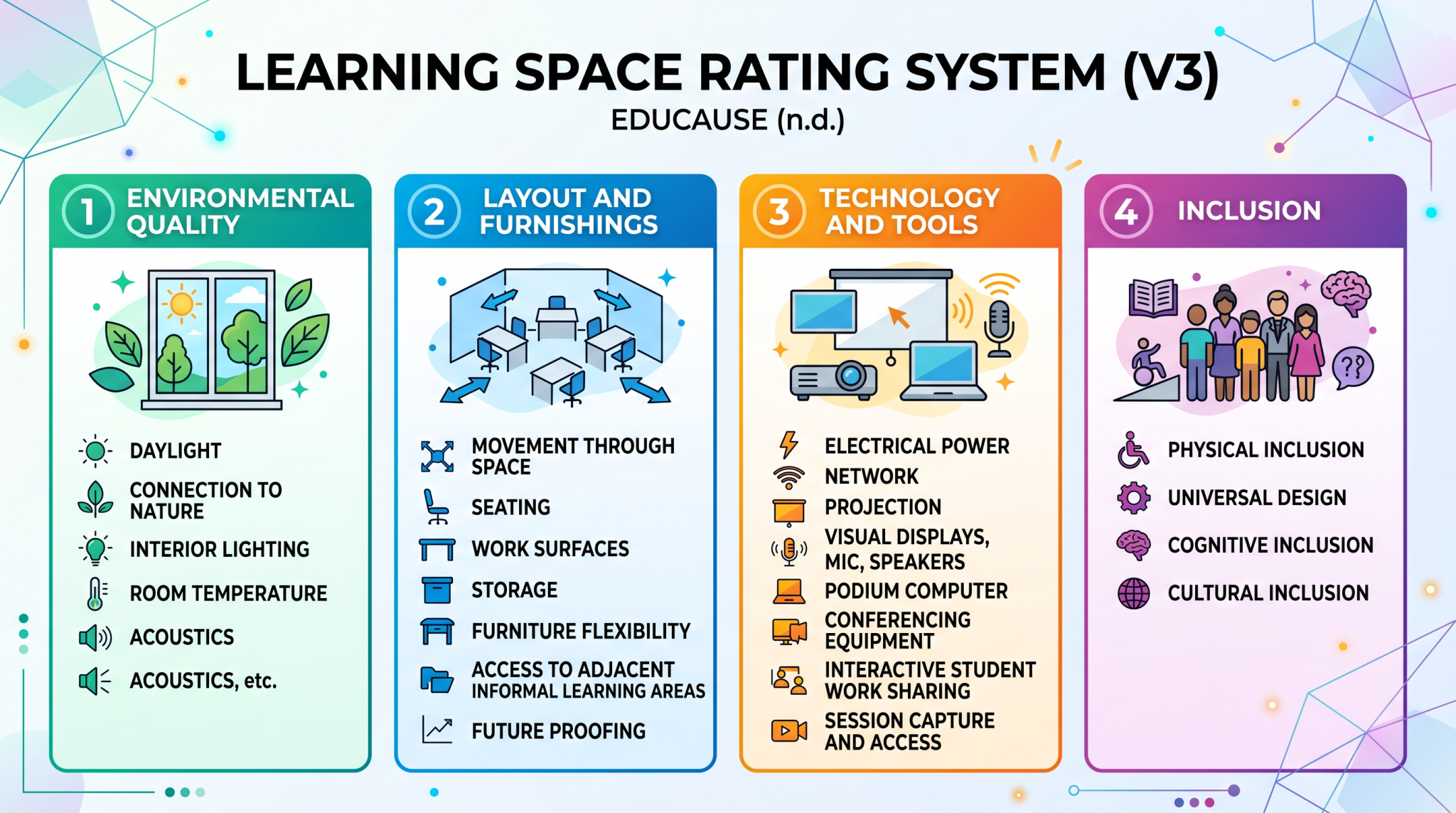
In addition to active learning principles, both studies examined classroom experience through four connected dimensions: environmental quality, layout and furnishings, technology and tools, and inclusion based on the Learning Space Rating System Version 3 (EDUCAUSE, n.d.). Together, these dimensions frame classrooms as pedagogical support systems, not merely physical or technological settings.
Participation and Methodology
The first study was a proactive measure to understand what faculty and students needed in the DKU classrooms holistically. A total of 53 faculty members participated in a survey and a group discussion, representing all three divisions, LCC, and grad programs. Insights from informal one-on-one conversations with faculty and students supported the general trends observed.
Key Findings
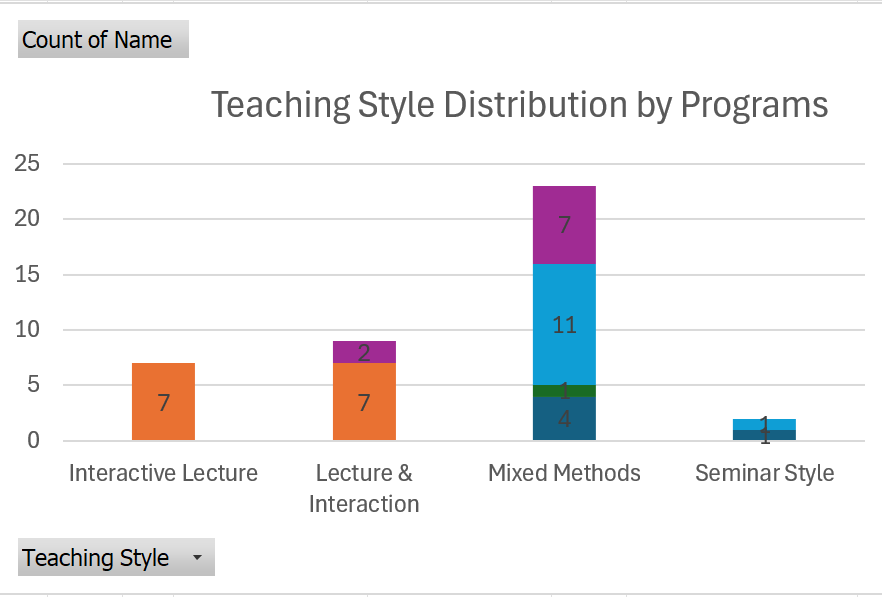
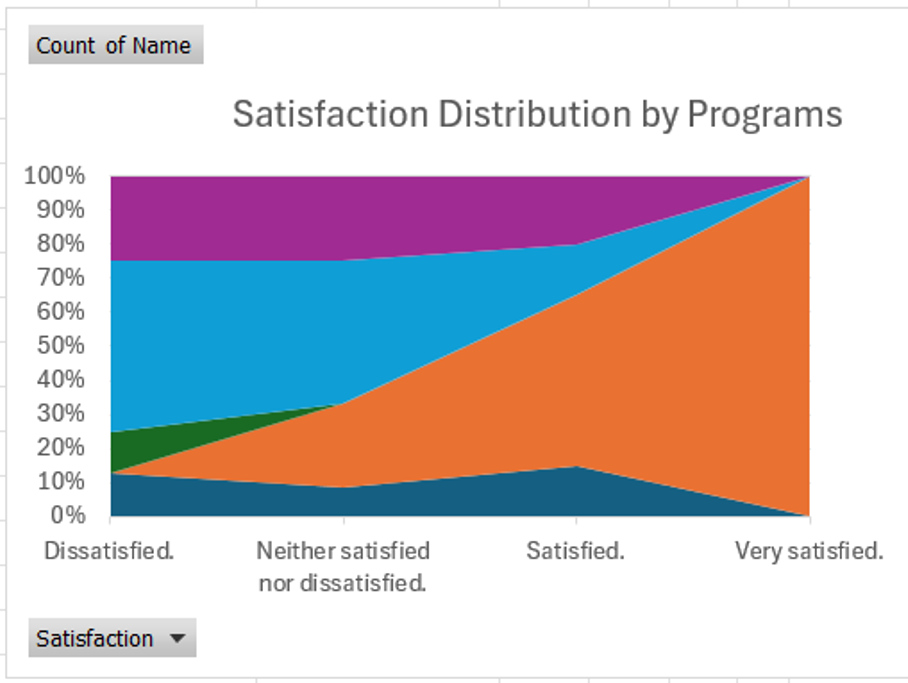
The findings indicate DKU classrooms are generally functional, but further improvements are needed to better support flexible, interactive, collaborative, inclusive, and student-centered learning.
Adaptable Layouts
Classrooms need to better support different teaching formats and active learning activities, including group work, discussion, presentation, demonstrations, and collaborative projects.
Reliable Infrastructure
Faculty and students ask for reliable basic classroom technology, stable Wi-Fi, sufficient power outlets, and accessible whiteboards to support student engagement and learning.
Inclusive Environment
Classrooms should be accessible to faculty and students with diverse physical needs and deter distraction by providing adequate ventilation, lighting, and temperature control.
Next Steps
Based on the suggestions from faculty and students, we propose a list of collaborative action items as the short term solutions such as changing the default layout of flexible classrooms, adding power outlets and portable whiteboards, and regular classroom check. Some could be applied to both Phase I and II classrooms. For the long term, we suggest high-level and systematic design and management of all the classrooms in existing and future buildings in collaboration with relevant stakeholders.
Participation and Methodology
The second study is a practical next step to test and identify optimal classroom design elements and support services to better promote student engagement in real teaching contexts before broader implementation and to inform future classroom planning at DKU.
5 Pilot Classrooms
AB 3101, AB 3103, AB 3107, AB 3109, and IB 2028, medium-sized flexible classrooms commonly used for undergraduate teaching
Mixed-Method, Practice-Based Approach
prior study review, oral and written feedback from 7 faculty, 3 classroom observations, 4 faculty interviews, 2 student feedback sessions, and survey of 16 faculty in Spring 2026
Key Findings
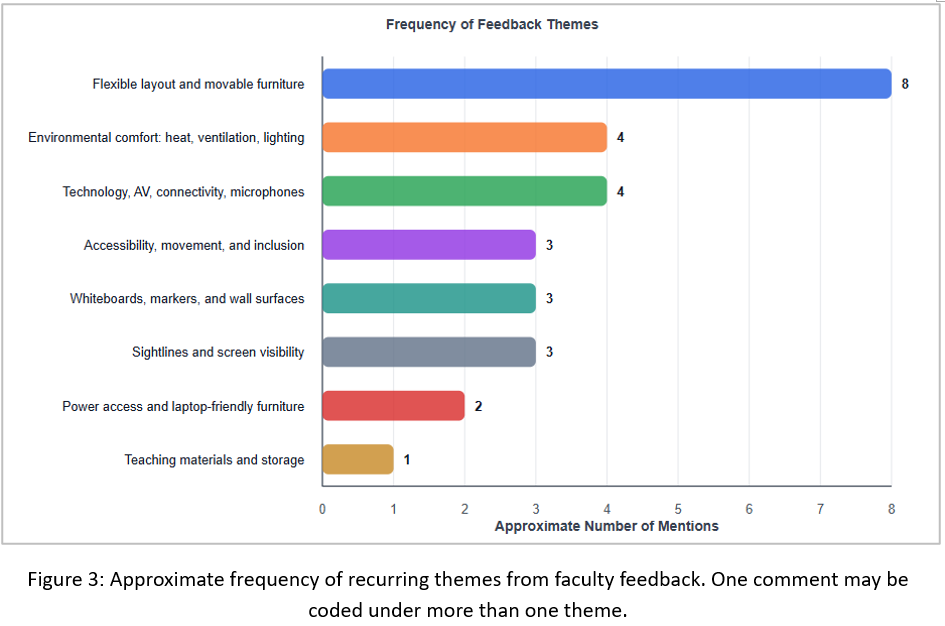
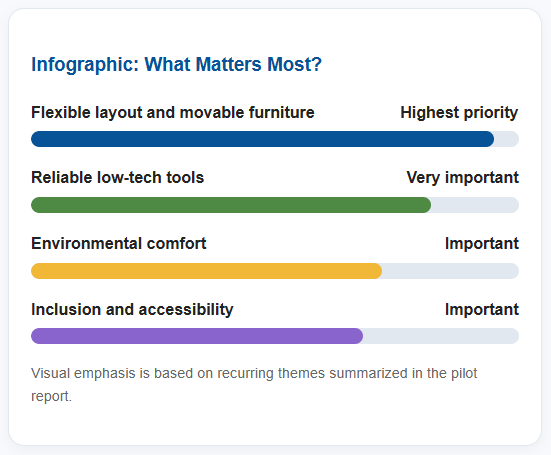
Overall, faculty rated the pilot classrooms as functional, with an average satisfaction rating of 3.5 out of 5. Preliminary findings are consistent with the themes identified in the first study.
Next Steps
Recommended improvements include better default classroom layouts, more reliable access to whiteboards and basic teaching tools, clearer classroom information for faculty, routine room readiness checks, and stronger coordination among CTL, IT, Operations, the Registrar, and academic units. Most of them are operational and low-budget measures, rather than major renovation issues.
The Model Classroom Pilot Project provides practical, evidence-based guidance for future classroom planning at DKU. It shows that learning spaces should be understood as pedagogical support systems, not merely physical or technological settings. Continued cross-unit collaboration will be essential to ensure that DKU classrooms support the institution’s commitment to liberal arts education, active learning, inclusion, and student engagement.