
By Luisa Li
Professor Wen Zhou, Assistant Professor of Evolutionary Anthropology in the Social Science Division, has received major recognition for her innovative teaching practice, winning the Second Prize in the “Linghang Cup” Jiangsu Province Teacher Digital Literacy Enhancement Practice Activity (“领航杯”江苏省教师数字素养提升实践活动) and the “Outstanding Work” (典型作品) in the National Level Contest in December 2025. This marks DKU’s first national-level award for teaching achievement, underscoring the university’s growing impact on educational innovation.
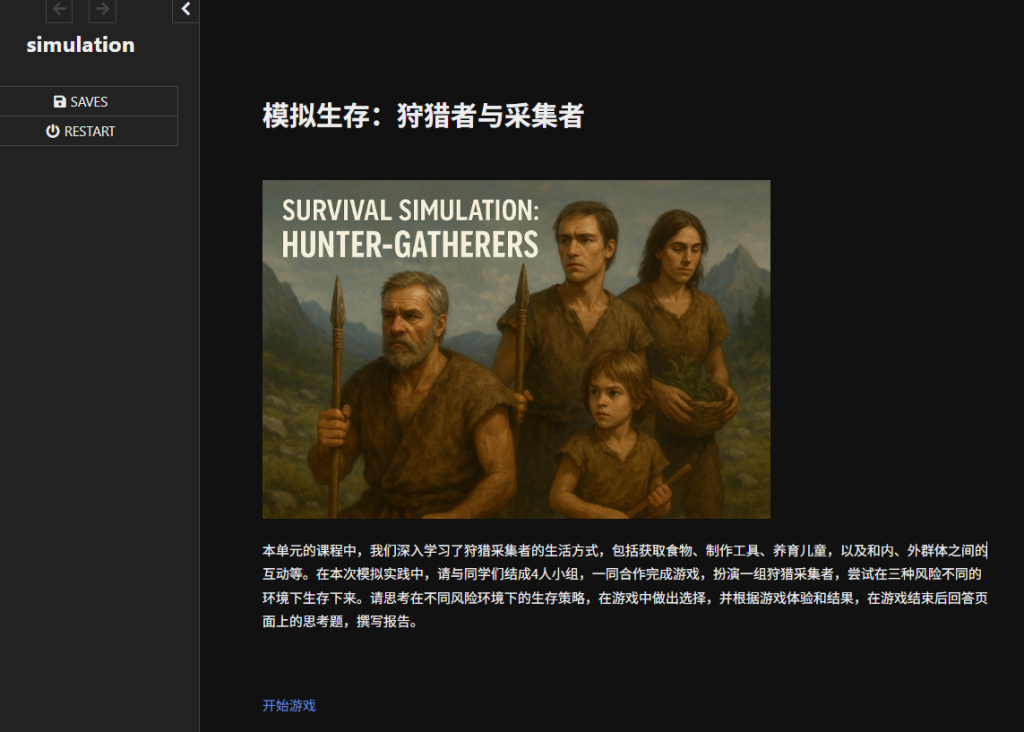
The awards recognize Professor Zhou’s game-based digital courseware, Survival Simulation: Hunters and Gatherers, an AI-enhanced learning tool that translates complex theories of judgment and decision-making into an interactive prehistoric survival adventure for students. The project grew out of Professor Zhou’s teaching in BEHAVSCI 402 Judgement and Decision Making; a course grounded in real-world problem-solving. Instead of adopting an off-the-shelf product, she intended to design a game tailored precisely to mitigate the gap in her students’ learning path. The contest gave her the external push she needed to turn a good idea into a working digital product.
The award represents more than recognition of a successful project for Prof. Zhou. She views her participation as an “opportunity for communication,” emphasizing innovation as a collaborative process rather than a competitive one. By learning from award-winning examples at other institutions and sharing her own, she joined a national dialogue on teaching innovation and used the contest as a platform to experiment with and exchange best practices for integrating digital tools in education.
Student and colleague feedback played a vital role in the project’s success. Student input during pilot testing informed iterative improvements, and the simulation was widely praised in course evaluations. Professor Zhou also emphasizes the value of cross-disciplinary feedback from colleagues and academic staff, highlighting the importance of institutionally supported communities of practice in refining teaching innovations.
Professor Zhou’s advice to fellow DKU faculty is to embrace openness and collaboration. “While change may feel uncomfortable at first. It can also be an opportunity to enjoy learning something new,” she reflected. She found immense reward in the collaborative process itself— partnering with her students as co-creators, connecting with peers nationwide, and strengthening ties with DKU’s Center for Teaching and Learning.
For Professor Zhou, the project’s greatest impact lies in its alignment with DKU’s educational mission. By enabling students to independently practice critical thinking and decision-making in an AI-empowered environment, the simulation prepares them for a world in which human-AI collaboration is increasingly essential. Her achievement not only provides a compelling example of how a thoughtfully designed educational product can make learning more accessible, adaptive, and engaging, but also underscores DKU’s commitment to pioneering educational innovation at the intersection of pedagogy and technology.
The “Linghang Cup” Teacher Digital Literacy Enhancement Practice Activity is an annual teaching contest at the provincial and national levels in China. Typically announced in early fall, it calls for applications in the form of mini lectures, coursewares, and course design cases.