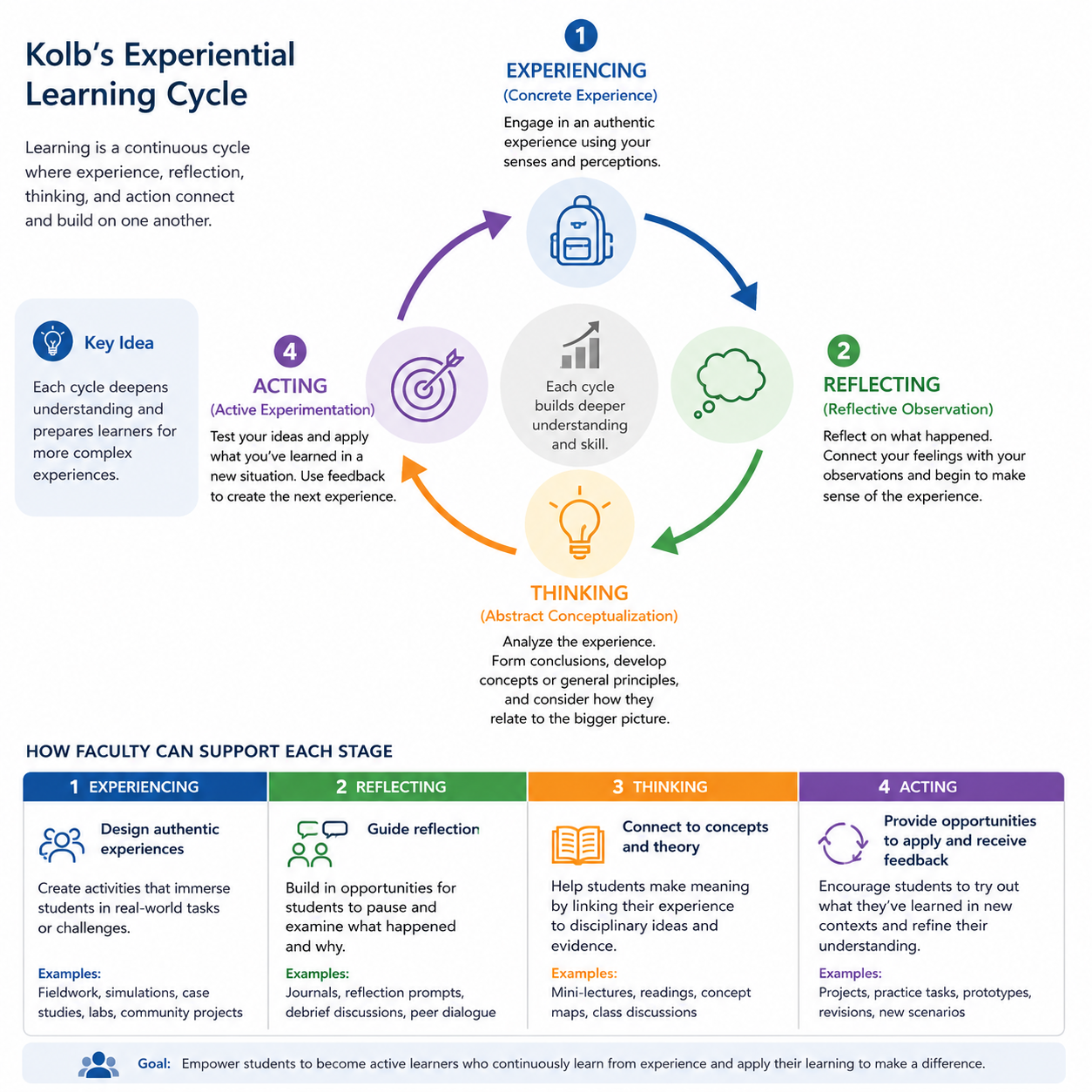
Experiential learning is an educational approach in which students learn through purposeful experience, followed by structured reflection, conceptualization, and application.
Figure 1 David Kolb's four-step Experiential Learning Cycle (generated by AI)
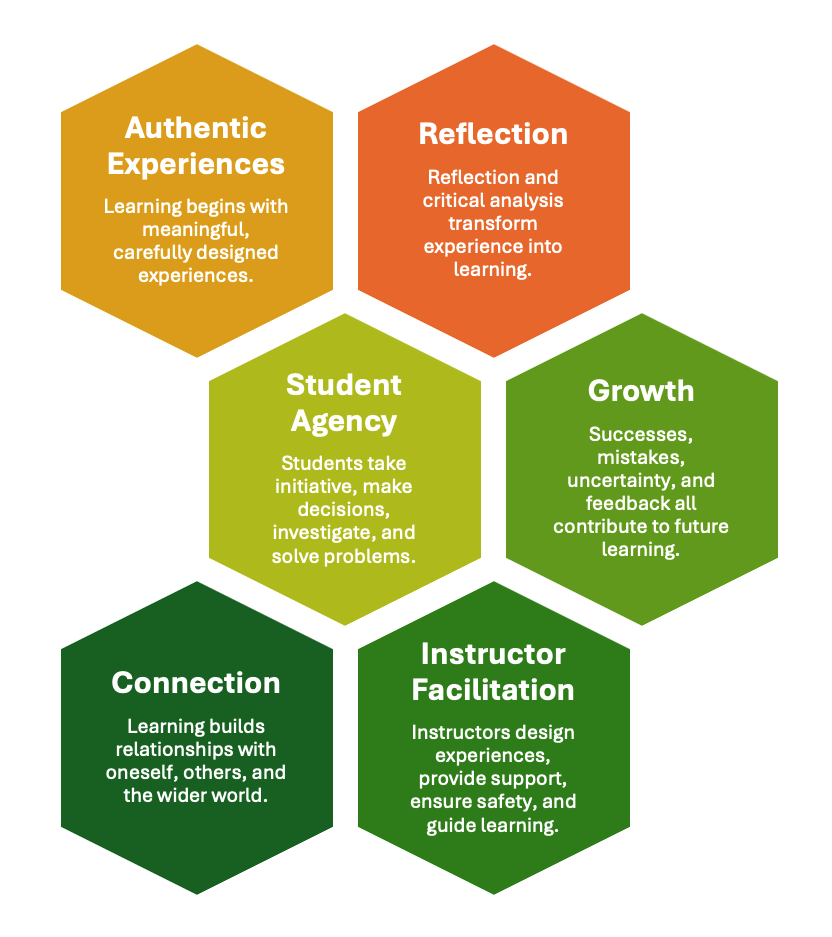
Experiential learning is not simply “add a real-world activity.” The better-supported design isauthentic work plus deliberate reflection, appropriate task detail, and active facilitation.
Figure 2 Principles of experiential learning
When is Experiential Learning Appropriate?
Experiential learning is most appropriate when the course learning outcome requires students to use knowledge in context, not merely recall or recognize it.
Use it when students need to:
Practice professional judgment or a complex skill.
Learn from authentic ambiguity or consequences.
Develop civic, intercultural, or community-facing capabilities.
Integrate theory and practice through reflection.
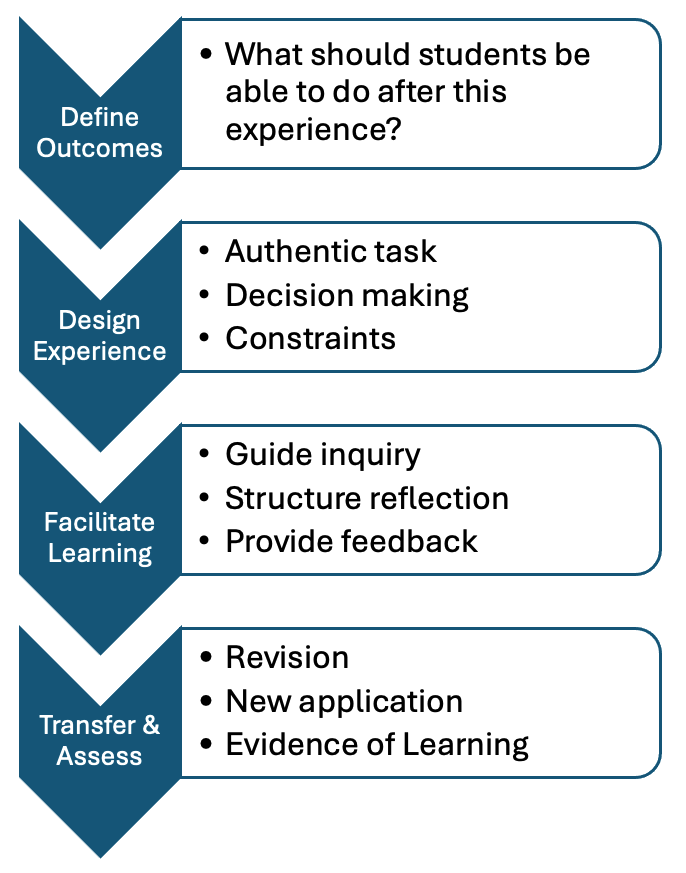
Designing Effective Experiential Learning
Figure 3 Workflow to design effective experiential learning